
Being told you have a Right Bundle Branch Block (RBBB) after an ECG can sound alarming.
Many patients immediately wonder:
- Is Right Bundle Branch Block dangerous?
- Does it mean I have heart disease?
- Will I need treatment?
- Can I continue exercising?
The reassuring news is that in the vast majority of cases, Right Bundle Branch Block is a benign ECG finding and does not affect life expectancy or quality of life.
However, it is important to understand what it means and when further investigation may be appropriate.
Key Takeaways
- Right Bundle Branch Block (RBBB) is a delay in the heart's electrical conduction system
- RBBB is commonly discovered incidentally during an ECG
- Most people with RBBB have no symptoms and require no treatment
- In many cases, RBBB is completely benign
- An echocardiogram is often recommended to ensure the heart is structurally normal
- Occasionally, RBBB can be associated with lung disease, heart muscle disease, or previous heart damage
- If investigations are normal, most people can live a completely normal life without restrictions
What Is Right Bundle Branch Block?
The heart has its own electrical wiring system that controls every heartbeat.
How does the heart's electrical system work?
Every heartbeat begins in the sinus node, the heart’s natural pacemaker located in the right atrium.
The electrical signal then travels through specialised pathways to activate the ventricles, the heart’s main pumping chambers.
One of these pathways is called the right bundle branch.
The right bundle branch carries electrical signals to the right ventricle, while the left bundle branch carries signals to the left ventricle.
What Happens in Right Bundle Branch Block?
What does Right Bundle Branch Block mean?
In Right Bundle Branch Block, electrical conduction through the right bundle branch becomes slowed or interrupted.
As a result, the right ventricle is activated indirectly rather than through its normal electrical pathway.
The electrical signal has to travel across the heart muscle from the left side of the heart to the right side.
Because this process is slower, characteristic changes appear on an ECG.
How Is RBBB Diagnosed?
Can an ECG detect Right Bundle Branch Block?
Yes.
Right Bundle Branch Block is usually diagnosed during a standard 12-lead ECG.
One of the key ECG features is widening of the QRS complex, which represents activation of the ventricles.
This finding is often discovered unexpectedly during:
- routine health checks
- pre-operative assessments
- heart health screening
- investigations for unrelated symptoms
What Causes Right Bundle Branch Block?
Right Bundle Branch Block is relatively common.
Why does RBBB occur?
The right side of the heart has a thinner wall than the left side, making the right bundle branch more susceptible to disruption.
Common causes include:
Age-related changes
As we age, the heart’s electrical system naturally changes.
Stretching of the right side of the heart
Conditions affecting the right ventricle can sometimes lead to RBBB.
Lung conditions
Certain lung diseases can place strain on the right side of the heart.
Pulmonary embolism
A blood clot in the lungs can occasionally cause Right Bundle Branch Block.
Structural heart disease
This may include:
- cardiomyopathy
- previous heart attack
- other heart muscle disorders
However, most people with RBBB do not have any of these conditions.
Is Right Bundle Branch Block Dangerous?
Should you worry about RBBB?
In most cases, no.
Professor Malcolm Finlay emphasises that the overwhelming majority of people with Right Bundle Branch Block:
- have no symptoms
- have no underlying heart disease
- have normal life expectancy
- require no treatment
For many patients, RBBB is simply an ECG finding rather than a diagnosis of heart disease.
What Symptoms Does Right Bundle Branch Block Cause?
Can RBBB cause symptoms?
Most people experience no symptoms at all.
RBBB is often discovered by chance during an ECG performed for another reason.
If symptoms are present, doctors will usually investigate whether another underlying condition may be responsible rather than the bundle branch block itself.
What Tests Should Be Performed?
Although RBBB is usually benign, it is sensible to investigate it properly when first diagnosed.
What investigations are recommended?
ECG
A high-quality 12-lead ECG confirms the diagnosis.
Echocardiogram
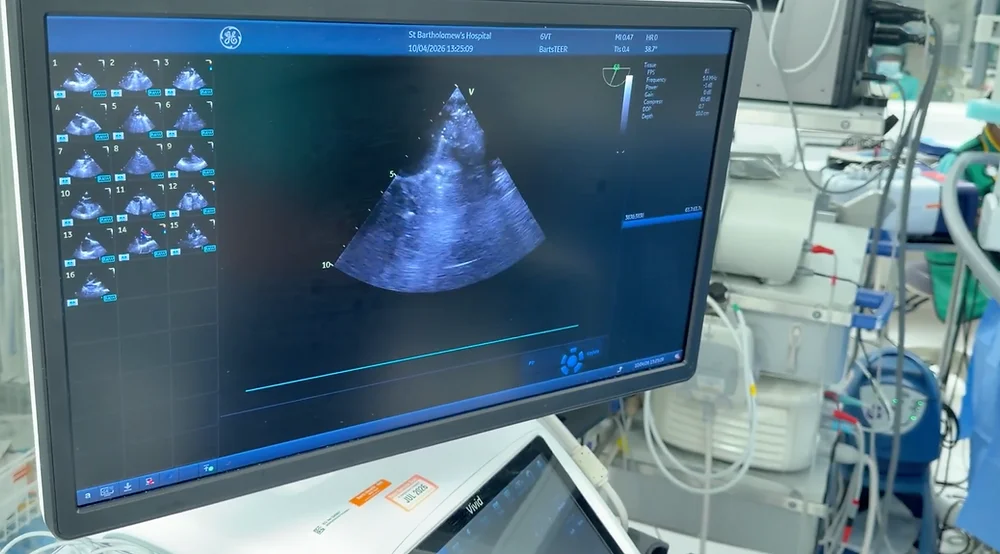
An echocardiogram is often the most useful next step.
This ultrasound scan evaluates:
- heart muscle function
- heart valves
- chamber size
- right heart structure
Professor Malcolm Finlay recommends an echocardiogram for most patients diagnosed with RBBB.
Are Additional Tests Ever Needed?
Sometimes.
Depending on symptoms and clinical history, further investigations may include:
Chest X-ray
To assess lung health.
CT Scan
To evaluate the lungs and heart in more detail.
Lung Function Tests
Useful if underlying lung disease is suspected.
Cardiac MRI
Occasionally used to assess the heart muscle itself.
These tests are generally reserved for selected patients where an underlying condition is suspected.
Do You Need Treatment for Right Bundle Branch Block?
Can RBBB be treated?
Most patients require no treatment whatsoever.
If:
- symptoms are absent
- the echocardiogram is normal
- no underlying heart disease is identified
then there is usually nothing that needs fixing.
In these situations, RBBB is simply considered a benign electrical finding.
Can You Exercise With Right Bundle Branch Block?
Yes.
Is exercise safe with RBBB?
If investigations confirm that the heart is structurally normal, most patients can:
- exercise normally
- travel normally
- continue sporting activities
- live completely unrestricted lives
This is one of the most reassuring aspects of an isolated Right Bundle Branch Block diagnosis.
Frequently Asked Questions About Right Bundle Branch Block
What is Right Bundle Branch Block?
Right Bundle Branch Block is a delay in electrical conduction through the right side of the heart’s conduction system.
Is Right Bundle Branch Block dangerous?
Usually not. Most cases are benign and do not affect life expectancy.
Does RBBB mean I have heart disease?
Not necessarily. Most patients with isolated RBBB have no underlying heart disease.
Do I need treatment for Right Bundle Branch Block?
Most people do not require treatment if investigations are normal.
Should I have an echocardiogram if I have RBBB?
Yes. An echocardiogram is often recommended to ensure the heart is structurally normal.
Can I exercise with Right Bundle Branch Block?
In most cases, yes. Patients with normal investigations can usually continue all normal activities.