

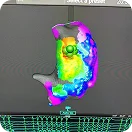
Almost all my patients go home the same day, occasionally with one night in. Most have sedation and local anaesthetic rather than a general anaesthetic. I guide catheters to the heart using X-ray and 3-D mapping, and a straightforward procedure takes one to two hours.
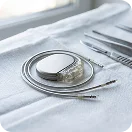
Not at all. Plenty of patients with mild symptoms, a healthy heart pump and low stroke risk need nothing beyond monitoring. Medication remains a genuine choice for many others, carrying risks broadly similar to those of ablation itself. Where rate control is genuinely difficult and ablation isn't appropriate, a pacemaker paired with AV-node ablation is sometimes the better route, though it does make someone dependent on the pacemaker for their heartbeat.
Yes, on the whole. A small number of patients have bruising or bleeding where the catheter enters the leg, and around 1 in 100 develop fluid around the heart, which usually just means a longer hospital stay to drain it. Stroke and injury to the oesophagus are now rare. I won't downplay it: death has occurred in roughly 1 in 2,000 procedures, though that's still a lower risk than an elective hip or knee replacement, at around 1 in 300.
Yes, and more than most people expect. Cutting back on alcohol, stopping smoking, and losing excess weight where it applies can all reduce how often AF strikes, and make any treatment you do have work better. For a minority, that's enough on its own; for most, it's what makes everything else stick.

It depends which type of AF you have. If your AF comes and goes (paroxysmal), most patients are symptom-free after one procedure, and success from your point of view runs above 80% overall. If it's constant (persistent), success is above 70%, though a second procedure is sometimes needed, particularly if it's been present for years.

If you were already on one before the procedure, I'll generally keep you on it afterwards, at least for a while. A brief, symptomless flare-up of AF can still carry a stroke risk, and ablation doesn't fully reverse the underlying changes in the heart that caused the AF in the first place. This gets reviewed individually, not applied as a blanket rule.
Often, yes, and it doesn't mean the procedure failed. Around half of patients treated for persistent AF, and around a third treated for paroxysmal AF, have a further episode. Usually that's just the treated tissue healing over, and a shorter follow-up procedure targeting that specific spot resolves it.