
The 3-Stage Approach
Catheter ablation treats a wide range of heart rhythm disorders (arrhythmias) when medications are ineffective, cause side effects, or when a permanent cure is preferred. These include:
Prevent Strokes
Stroke prevention comes first, because AFib is a leading preventable cause of stroke. Risk is calculated using the CHA₂DS₂-VASc score. Where risk is significant, modern anticoagulants (NOACs) are prescribed, now usually preferred over aspirin.
Control the Heart Rate
Rate control stops the heart racing constantly while AFib is present, protecting long-term heart function. Beta blockers and calcium channel blockers slow an irregular heartbeat. Left untreated, a persistently fast rate can contribute to heart failure over time.
Restore Normal Rhythm
Catheter ablation is the most effective way to restore and maintain a normal rhythm long-term. Medication such as amiodarone is used where ablation is not yet the right step for a patient's circumstances.
What Is AFib Ablation?
AFib ablation is a catheter-based procedure that treats the small areas of heart tissue triggering atrial fibrillation , most often where the pulmonary veins connect to the heart.
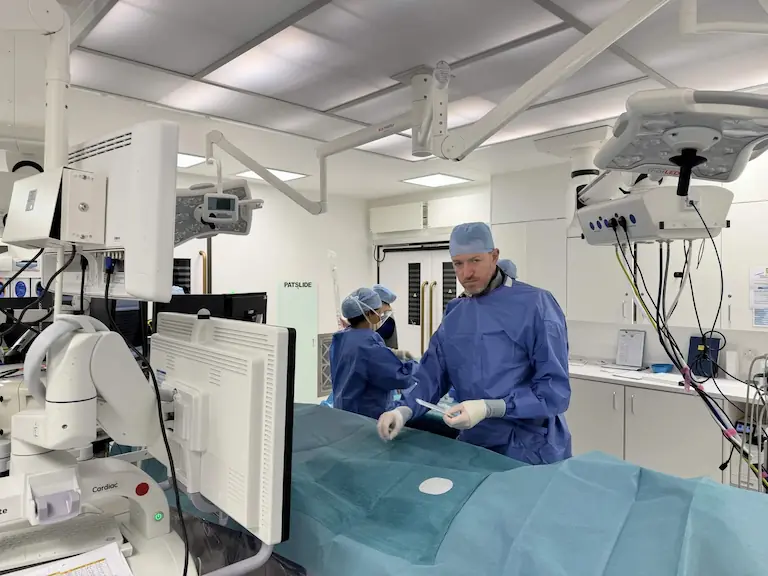
Two thin catheters are inserted through a vein in the leg and guided to the heart using real-time imaging and 3D mapping. The tissue responsible for triggering AFib is then precisely treated. The procedure typically takes between 35 minutes and 1.5 hours and is usually performed as a day case under general anaesthetic.
Professor Finlay pioneered a day-case AFib ablation pathway performed in under an hour for suitable patients, meaning most go home the same day and return to normal activity quickly.
AFib (Atrial Fibrillation)
an irregular and often fast heart rhythm originating in the upper chambers of the heart.
Ablation
a procedure that uses heat, cold or, in Pulsed Field Ablation, electrical pulses, to treat the heart tissue causing an abnormal rhythm.
CHA₂DS₂-VASc score
a clinical scoring tool used to estimate stroke risk in patients with AFib.
Ablation is generally considered where symptoms persist despite medication, or where medication is not tolerated or not preferred, in line with NICE guidance on the diagnosis and management of atrial fibrillation. For some patients, particularly those with symptomatic paroxysmal AF, it may be discussed as an early option rather than a last resort.
AFib Ablation Success Rates
Success depends on the type of AFib being treated. Paroxysmal AFib (episodes that start and stop on their own) responds better to a single ablation than persistent AFib.
Published success rates are generally in the region of 70 to 80% for paroxysmal AFib, compared with 50 to 60% from a single procedure for persistent AFib. With repeat procedures where needed, overall success over time can exceed 80% for paroxysmal AFib. These are general clinical ranges rather than a guarantee for any individual patient; Professor Finlay will discuss the likely outcome for your specific pattern of AFib, current heart structure and health history during consultation.
Risks of AFib Ablation
AFib ablation is a safe, well-established procedure. Serious complications are uncommon, and the risk of death is very low.
As with any invasive heart procedure, risks include bleeding or bruising at the catheter site, and rarely, damage to surrounding structures. Death is a very rare outcome of the procedure. Professor Finlay discusses your individual risk profile openly, in the context of your own health and heart structure, before any decision is made together.
Frequently Asked Questions About AFib Ablation
What is AFib ablation?
AFib ablation is a catheter procedure that treats the heart tissue triggering atrial fibrillation, most often performed as a day case under general anaesthetic, to restore a normal heart rhythm.
Will I need to stay overnight after AFib ablation?
Most patients go home the same day. An overnight stay is occasionally advised for monitoring, depending on the individual case and how the procedure goes.
How soon can I fly or drive after AFib ablation?
Most patients resume light activity within a few days and can typically drive or fly within about a week, once Professor Finlay has confirmed a good recovery from the anaesthetic or sedation.
Do I need to stay on blood thinners after AFib ablation?
This depends on your individual CHA₂DS₂-VASc stroke risk score, not on whether the ablation itself was successful. Professor Finlay reviews this score with you and discusses whether it is safe to stop anticoagulation afterwards.
Is AFib ablation painful?
The procedure is performed under general anaesthetic or with sedation and local anaesthetic, so patients do not feel it during the procedure itself. Mild discomfort at the catheter site is common for a few days afterwards.
What is the difference between AFib ablation and catheter ablation?
AFib ablation is catheter ablation performed specifically to treat atrial fibrillation. Catheter ablation is the broader technique, also used to treat other rhythm disorders such as atrial flutter and SVT.
What to expect on the day
Arrive & Prepare
Simple checks, and we confirm your consent together.
Anaesthetic
Local anaesthetic with sedation, or a general anaesthetic if you prefer.
The Procedure
Usually one to two hours, guided by 3D mapping.
Recovery & Home
Most patients leave the same day and rest at home.
Quick facts
Duration
35 min – 1.5 hrs
Stay
Day case, usually same day
Anaesthesia
Usually general
Discuss AFib Ablation with Professor Finlay
Related services
Your treatment journey
Consultation
Your history, ECG and a clear diagnosis (face-to-face or by video).
Plan Agreed Together
Options explained plainly, so you decide together with Professor Finlay.
Day-Case Procedure
Usually under an hour for suitable patients, home the same day.
Follow-Up & Support
Structured review and direct access to the PA team.