
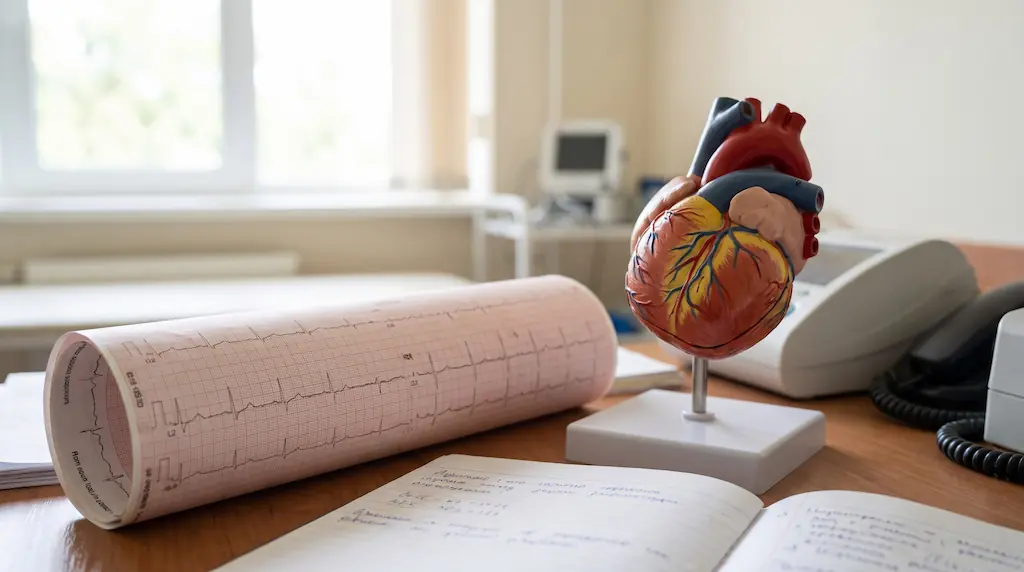
How We Get to a Diagnosis
Listen First
A detailed history of when your palpitations happen, how they feel, and what brings them on or settles them.
Capture the Rhythm
An ECG, and where needed, a Holter monitor or implantable loop recorder, to record what's actually happening in your heart.
Explain & Treat
A clear diagnosis, explained plainly, with a treatment plan matched to the specific cause.
What Are Palpitations?
Palpitations are the sensation of your own heartbeat, whether that’s racing, pounding, fluttering, or skipping a beat.
Palpitations are extremely common and are not always a sign of a serious problem. However, because the sensation can have many different underlying causes, from harmless extra beats to a rhythm disorder needing treatment, an accurate diagnosis matters more than the symptom itself.
What Causes Palpitations?
Palpitations can be caused by heart rhythm disorders, or by non-cardiac factors such as caffeine, stress, thyroid problems or anaemia.
Atrial fibrillation, atrial flutter, SVT or other arrhythmias
Ectopic beats (occasional extra or skipped beats, usually harmless)
Caffeine, alcohol, or stimulant use
Anxiety or stress
Thyroid problems
Anaemia or dehydration
Certain medications
Professor Finlay’s role is to work out which of these applies to you, and to rule out a rhythm disorder where one isn’t present.
How Are Palpitations Diagnosed?
Diagnosis starts with an ECG and history, and moves on to further monitoring if palpitations are infrequent or weren’t captured on the first test.
ECG
A snapshot of your heart's electrical activity, done in clinic
Holter monitor
Continuous ECG recording over 24 hours to 2 weeks, for palpitations that occur every few days.
Implantable loop recorder
A long-term monitor for palpitations or blackouts that occur only occasionally.
Blood tests
To check for thyroid problems, anaemia or other contributing factors.
Echocardiogram
Where the heart's structure needs to be assessed alongside its rhythm.
Treatment Options for Palpitations
Treatment depends entirely on the cause, from simple reassurance and lifestyle changes through to catheter ablation.
Reassurance & lifestyle advice
Where palpitations are due to caffeine, stress or occasional ectopic beats
Medication
To manage an underlying rhythm disorder or its symptoms
Catheter ablation
Where an arrhythmia such as AF, atrial flutter or SVT is identified and treatment is appropriate
Treating the underlying cause
Such as thyroid treatment, where palpitations are not due to the heart's electrical system at all
When Should Palpitations Be Reviewed by a Specialist?
Palpitations that are frequent, prolonged, or accompanied by other symptoms are worth having properly assessed rather than waiting to see if they settle.
Palpitations alongside chest pain, breathlessness, dizziness or blackouts should be assessed promptly. If you are experiencing chest pain, severe breathlessness or a blackout right now, this is a medical emergency and you should call 999 or attend A&E rather than book a routine appointment.
Frequently Asked Questions About Palpitations
Are palpitations dangerous?
Most palpitations are not dangerous, particularly occasional extra beats. However, some causes, such as certain arrhythmias, do need treatment, which is why an accurate diagnosis matters.
What if my ECG is normal but I still get palpitations?
A normal ECG only reflects the moment it was taken. If your palpitations come and go, a Holter monitor or implantable loop recorder can capture what’s happening during an actual episode.
Do palpitations mean I have atrial fibrillation?
Not necessarily. Palpitations have many possible causes, and AF is only one of them. Proper investigation is the only reliable way to know which applies to you.
Can stress and anxiety cause palpitations?
Yes, stress and anxiety are common, genuine causes of palpitations. Professor Finlay’s assessment helps confirm this and rule out a rhythm disorder at the same time.
What to Expect at Your Appointment
History & Symptom Review
A detailed discussion of when and how your palpitations occur.
ECG & Baseline Tests
An initial check of your heart's electrical activity, done in clinic.
Further Monitoring if Needed
A Holter monitor or loop recorder arranged where symptoms are infrequent.
Diagnosis & Treatment Plan
A clear explanation of the cause, and the recommended next step.
Quick facts
First appointment
Usually a same-day PA call-back
Consultation
Face-to-face or video
Referral
Not required for private consultations
Discuss Your Palpitations with Professor Finlay
Related services
Your treatment journey
Initial Consultation
Your symptoms and history reviewed in full.
Investigation
The right monitoring or test chosen to catch the cause.
Diagnosis Confirmed
Results explained plainly.
Treatment & Follow-Up
A tailored plan, with structured review afterwards.