
The 3-Stage Approach
Detects a Slow Rhythm
The device continuously monitors your heartbeat and recognises when it drops below a safe rate.
Steps In When Needed
A small electrical pulse prompts the heart to beat normally, only when your own rhythm needs support.
Supports You Long-Term
Regular device checks confirm it is working correctly, adjusting settings over time as your needs change.
What Is a Pacemaker?
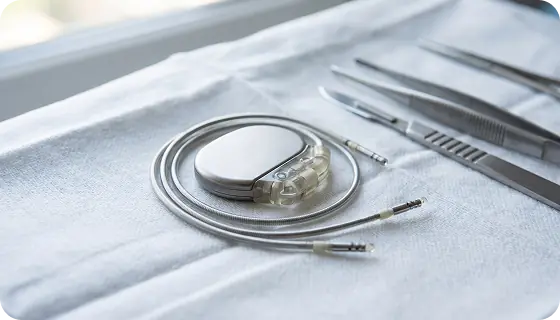
A pacemaker is a small device, implanted under the skin near the collarbone, that sends electrical signals to keep the heart beating at a safe rate.
It is connected to the heart by one or more thin wires (leads), placed via a vein. Rather than running constantly, most modern pacemakers only step in when your own natural rhythm is too slow, working alongside your heart rather than replacing it.
When Is a Pacemaker Needed?
A pacemaker is typically recommended when the heart’s own electrical system is beating too slowly, or pausing, in a way that causes symptoms or carries risk.
Bradycardia
A persistently slow heart rate
Heart block
Where the electrical signal between the heart's upper and lower chambers is delayed or interrupted
Sick sinus syndrome
Where the heart's natural pacemaker doesn't fire reliably
Symptoms such as dizziness, blackouts or breathlessness
Where a slow rhythm is found to be the cause
Pacemakers vs ICDs vs Cardiac Resynchronisation
Pacemakers, ICDs and Cardiac Resynchronisation devices all sit under the skin near the collarbone, but each does a different job.
Pacemaker
Treats a heart rhythm that beats too slowly
ICD (Implantable Cardioverter Defibrillator)
Monitors for dangerous fast rhythms and can deliver a shock to correct them, used for patients at risk of a life-threatening arrhythmia
Cardiac Resynchronisation Therapy (CRT)
Helps the heart's chambers beat in a more coordinated way, for certain patients with heart failure
Is Pacemaker Implantation Safe?
Pacemaker implantation is a well-established, generally safe procedure performed routinely worldwide.
As with any implanted device, risks include bleeding or bruising at the site, infection, or issues with lead position, all of which are uncommon. Professor Finlay discusses your individual risk profile before any decision is made together.
Living With a Pacemaker
Most patients return to normal daily activities within days to weeks, with only a few practical adjustments.
Most household electrical items and everyday activities are unaffected. Some precautions apply around strong magnetic fields and certain medical procedures, which Professor Finlay and the device follow-up team will explain clearly, along with your device card to show other healthcare professionals.
Frequently Asked Questions About Pacemakers
How long does a pacemaker battery last?
Pacemaker batteries typically last many years, and battery life varies by device and how often it is used. Regular device checks monitor battery life so a replacement can be planned in good time.
Will I be awake during pacemaker implantation?
Pacemaker implantation is usually performed under local anaesthetic, with sedation available if you’d prefer to be more relaxed during the procedure.
Can I still exercise with a pacemaker?
Most patients can return to normal exercise once fully recovered, and pacemakers are designed to support an active life. Professor Finlay will advise on timing and any specific precautions for you.
Will a pacemaker set off airport security?
Pacemakers can be detected by security equipment, so carrying your device identification card is recommended. Airport security screening does not damage a modern pacemaker.
What to expect on the day
Arrive & Prepare
Pre-procedure checks and consent confirmed together.
Local Anaesthetic
The device is usually implanted under local anaesthetic, with sedation available if you'd prefer.
The Procedure
The device and leads are placed under the skin near the collarbone and guided to the heart via a vein, usually taking about an hour.
Recovery & Home
Monitored for a few hours afterwards; most patients go home the same day or the following morning, with clear wound care advice.
Quick facts
Duration
Around 1 hour
Stay
Day case, usually home same day
Anaesthesia
Usually local, with sedation if preferred
Discuss Pacemaker Implantation with Professor Finlay
Related services
Your treatment journey
Consultation & Assessment
Confirming the need for a pacemaker and which type is right for you.
Device Selected Together
The options explained plainly, so you decide with Professor Finlay.
Day-Case Implantation
Usually a short, well-tolerated procedure.
Follow-Up & Device Checks
Wound review, then ongoing device checks as part of long-term care.