
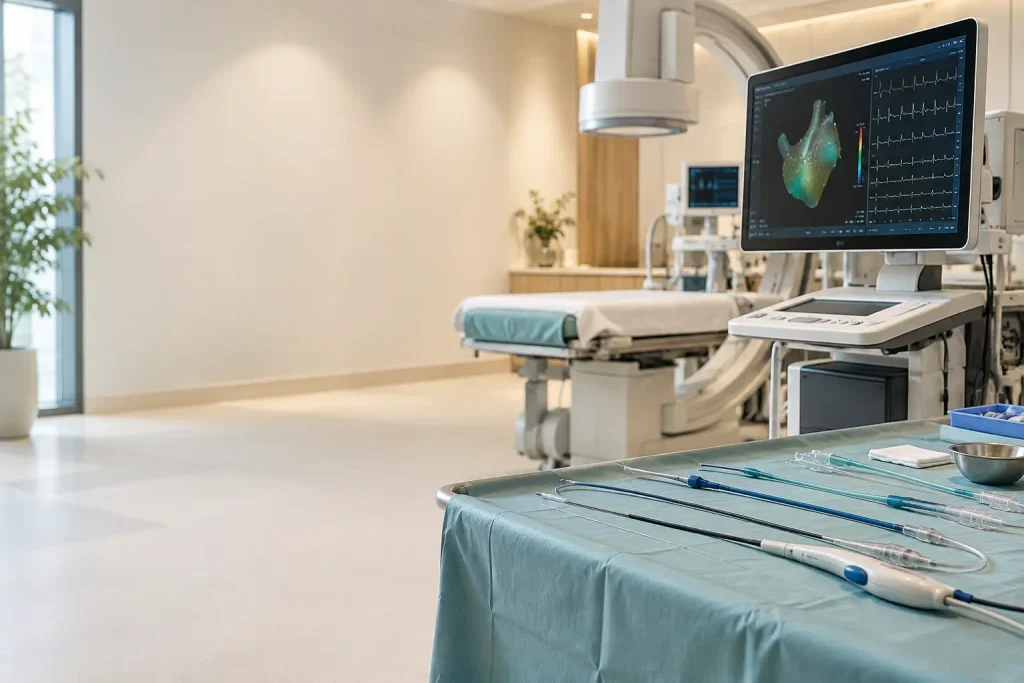
The 3-stage approach
Diagnose the Disorder
Your ECG and history establish exactly which rhythm disorder is present, using further monitoring or investigations where the picture isn't yet clear.
Agree the Right Treatment
Options are explained plainly, from medication through to ablation or device therapy, so you decide together with Professor Finlay.
Treat & Follow Up
Treatment is delivered, most often as a day case, with structured follow-up and direct access to the PA team.
What Counts as a Heart Rhythm Disorder?
A heart rhythm disorder, or arrhythmia, is any heartbeat that is too fast, too slow, or irregular.
Common symptoms include palpitations, breathlessness, dizziness and blackouts, though some rhythm disorders cause no symptoms at all and are only found during routine investigation. Professor Finlay treats the full spectrum of these conditions, including:
Atrial Fibrillation (AF)
Atrial Flutter
SVT (Supraventricular Tachycardia)
WPW (Wolff-Parkinson-White) syndrome
Atrial Tachycardia
Palpitations
Blackouts and dizzy spells
How Is a Heart Rhythm Disorder Diagnosed?
Diagnosis starts with an ECG and clinical history, followed by further monitoring or investigations if the initial picture is unclear.
ECG
the first-line test measuring the heart's electrical activity.
Holter monitor
continuous ECG monitoring over 24 hours to two weeks, to catch rhythm changes that come and go.
Implantable loop recorder
a long-term monitor for infrequent or elusive symptoms, such as occasional blackouts.
Echocardiogram
an ultrasound scan assessing the heart's structure and function.
Treatment Options for Heart Rhythm Disorders
Treatment ranges from medication and lifestyle changes through to catheter ablation and implantable devices, depending on the diagnosis.
Medication
rate-control and rhythm-control drugs, and anticoagulants where stroke risk applies.
Catheter ablation
treats the heart tissue causing the abnormal rhythm, including Pulsed Field Ablation for suitable patients.
Pacemakers & ICDs
implantable devices that regulate or protect the heart's rhythm.
Cardiac resynchronisation therapy
device therapy for certain patients with heart failure.
Second opinions
an independent review where a diagnosis or treatment plan needs further clarity.
Which combination is right for you depends on the specific rhythm disorder, your symptoms and your overall heart health, assessed individually during consultation.
Why See a Heart Rhythm Specialist Rather Than a General Cardiologist?
Heart rhythm disorders are a specialist sub-field of cardiology, and an electrophysiologist has additional training focused specifically on the heart’s electrical system.
Professor Finlay is a Cardiac Electrophysiologist as well as a Consultant Cardiologist, with over 20 years in cardiology and well over 1,000 ablation, pacemaker and ICD procedures performed. He also holds academic and leadership roles, including an Honorary Clinical Professorship at Queen Mary University of London and senior positions within the European Heart Rhythm Association.
Frequently Asked Questions About Heart Rhythm Treatment
What is the difference between a cardiologist and an electrophysiologist?
An electrophysiologist is a cardiologist with additional specialist training in the heart’s electrical system and rhythm disorders, including catheter ablation and device therapy.
Do all heart rhythm disorders need treatment?
Not always. Some rhythm disorders are monitored rather than actively treated, particularly where they cause no symptoms and carry low risk. Professor Finlay will advise whether treatment, monitoring, or no action is most appropriate for your specific case.
Can heart rhythm problems be treated without surgery or ablation?
Yes. Many rhythm disorders are managed successfully with medication alone, particularly where symptoms are mild or ablation is not yet appropriate.
How quickly can I be seen?
Requesting an appointment online usually results in a same-day call back from the PA to arrange the most suitable clinic or a remote video consultation.
What to expect on the day
Arrival & History
We discuss your symptoms and relevant medical history in full.
Examination & ECG
A baseline assessment of your heart's electrical activity.
Discussion
Findings explained plainly, with treatment options set out clearly.
Plan Agreed Together
Further tests, treatment, or reassurance, with a written summary for your records.
Quick facts
Duration
Usually a same-day PA call-back
Stay
Face-to-face or video
Anaesthesia
Not required for private consultations
Discuss AF treatment with Professor Finlay
Related services
Your treatment journey
Diagnose the Disorder
Your ECG and history establish exactly which rhythm disorder is present, with further monitoring or investigations where needed.
Agree the Right Treatment
Options explained plainly, from medication through to ablation or device therapy, so you decide together with Professor Finlay.
Treat
Delivered most often as a day case, whichever treatment is right for your diagnosis.
Follow-Up & Support
Structured review and direct access to the PA team.